Home Page
Narratives
Improbability Driving in Dundee
Looking for White Van Man
Strange tales from the Kingsway
Appeals
Legal Notes
A Kangaroo in the Court Room
Working to Procure Injustice
Fighting Injustice
Open Letters
Updates
Other Info
Criminal records
The Cost of Injustice
|
|
Lex, Lies, (no Videotape)
"Access to justice for a defendant in criminal proceedings is entirely dependant on the trial
process being fair. This extends not only to the judiciary and the prosecuting authorities but
also the defence lawyers."
Maslen Merchant - from "Poor defence", published in The Solicitors Journal, Justice Gap series, 2012
A look at the perpetrators, officials and other bad actors
in this comedy of errors
In the Lies of the Law
Of the 12 professionals I spoke to about various aspects of the case, 6 told lies.
3 of these, perpetrated by minor officials, can be classed as misinformation.
The other 3, uttered by high profile figures, were deliberate falsehoods.
Although the Criminal Justice System, as the Scottish Government calls it, claims that justice is its business,
justice is seldom dispensed: it is more likely to be dispensed with.
The System takes a scattergun approach to justice, appearing to believe it is better that 10 innocents suffer
in order to avoid 1 guilty person going free.
Those who work for the System assume that anyone caught in its sticky web is bound to be lying.
The only people who are listened to and believed are prosecution witnesses, because witnesses are the lifeblood of the System:
it could not survive without them. Unsurprisingly, the System doesn’t care that they might be liars.
And because the System's procedures are designed to perpetuate itself, it is biased towards getting convictions
rather than getting to the truth.
Many of those employed by the System – sheriffs, prosecutors, defence lawyers, administrators – seem to suffer from this bias.
In my case, the bias surfaced as deceit and dishonesty, obstruction, lack of transparency and utter contempt for me, the Defendant.
The end result – my conviction – would have ticked the requisite legal boxes, but it was neither fair nor just.
A solicitor friend once advised me that without really, really good evidence, it would not be worth trying to clear my name.
This is because the Appeal Court quashes only a tiny proportion of the few cases that are referred to it.
Rationally speaking, trying to appeal my conviction would be futile.
He could not have properly understood that the strong drive to prove one's innocence pushes rationality into the back seat.
This drive is borne out by the Scottish Criminal Cases Review Commission's statistics, which are given in detail in this
statistical footnote and summarised below:
60% of motoring conviction applications reviewed by the SCCRC were for minor offences
such as defective or missing documentation, speeding, using a mobile phone and careless driving.
3% of all the applications to the SCCRC end up being successful at the Appeal Court.
What does this mean?
Well, the offences may be minor, the sentences trivial and the odds against a successful appeal overwhelming,
but the applicants know they are innocent and are impelled to make every possible effort to clear their names.
The bureaucrats who operate the Scottish Justice System do not appear to understand this:
believing in the fundamental soundness of their System, they imagine that people who protest their innocence are
either in denial or playing the system.
They clearly have not asked themselves why so many guilty people would try to appeal their minor convictions when
the chances of success are so vanishingly small.
The Crown's Witnesses
If I bear any ill will, it is directed towards the authorities for not protecting me from the conspiracy rather than
towards the conspirators themselves (though 'conspirators' is really too grand a term for a gang of bullies).
Funnily enough, I am grateful to this gang, for these 3 reasons:
1 - I acquired an interesting life experience.
2 - The cost was low - the minor penalties imposed by the Scottish State are nothing compared
to the suffering of innocent people wrongly banged up in prison.
3 - Psychopathic bullies like Peter Carnegie often do physical damage to their victims.
He didn't and for that I am much relieved.
Motives
After his egregious tailgating, when I began cautiously to overtake him, Peter Carnegie
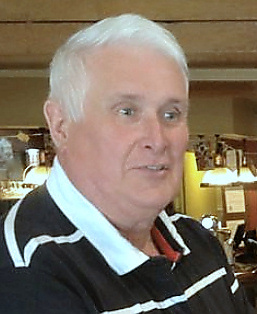 had the opportunity to see my reg number and write it down on a scrap of paper.
If anyone in the courtroom thought this was potentially risky, they made no comment.
Writing down registration numbers on the move is unlikely to be the first thing that comes
to mind when you've just had the shock, as he claimed, of being forced into the central reservation.
No - Carnegie was fuming with rage and even then was formulating a plan of revenge that involved a remarkable degree of
dishonesty and deception.
I get that someone suffering tantrums he can't control might seek revenge by complaining to the police.
But to continue all the way to court would be so daunting to a normal person that they would
surely call a halt before co-opting others into their warped world.
Why Roman would want to get involved is less obvious. Yet finding no discernible

motive should not be taken as an excuse to shrug and say: “why would he?” and then go on to claim that no crime was committed.
Better to accept that Roman's motives are unfathomable - and would be to any rational person.
I have long since consigned them to a mental box marked 'improbable but not impossible' and
given up speculating on what they might be.
And what of Jessica, the phantom pillion?
The weakest member of the gang, the two men pushed her forward so they could stay in the background and pull the strings:
she alone gave a Precognition Statement and she alone complained to the Police about my post-trial investigations.
She may have believed she was being asked to bear false witness to a genuine incident and thought the end would
justify the means.
Or she may be trapped in a controlling relationship, so will always do her boyfriend's bidding.
In a way, and with some reluctance, I admire her courage in going through with the entire, scary process.
The Police
Police forces are in cahoots with prosecuting authorities and are certainly not impartial investigators.
This is contrary to UK law, which obliges them to seek the truth rather than just go for convictions.
Tayside Police exploited the casual way in which the law actually works: they realised that a couple of superficially
damning witness statements would be all that was needed for the desired conviction.
There would be no need for any bothersome investigations and no need to ask me, the Accused, for a statement.
It wasn't required, my solicitor said: there was "a sufficiency of evidence".
I had assumed (mistakenly) that it was his job to challenge the sufficiency of the prosecution’s evidence,
not to blindly accept it.
I told the officers who charged me that the accuser had tailgated me.
As an unplanned, un-premeditated remark, known as Res Gestae in legal circles, it might have helped
my defence had it been given in court.
But it wasn't: my solicitor was never told about it. And he never troubled to ask me what I'd said to the police.
But another remark I made, that I was the driver, was given in court, because it helped the
prosecution case.
Tayside Police knew I was contesting their version of events. Accordingly, it was their legal (and moral) duty to
investigate my version.
If that meant looking for evidence that their witnesses might have colluded, so be it.
If it meant asking the supposed pillion passenger’s employer and colleagues when and how she’d got to work and when
she’d left, so be it.
They did none of these things – as a breach of duty their negligence might not rank highly in the dereliction
stakes, but it gave me no chance in court.
After the trial, when I went to Aberdeen's central police station to report the perjury,
the Desk Sergeant refused to accept it, smirking as he told me to go to the Procurator Fiscal.
He had small eyes set in a round, red face. If he’d had an upturned nose, the picture would have been complete.
Behind him, there were sniggers from an audience comprised of assorted addicts and riff-raff.
I was trying to report that I had been violated by someone else's actions.
Instead, I was humiliated.
Tayside Police Traffic Division

Inspector Gordon Taylor, its chief, rang to tell me about a Police Incident Log, but made several
inaccurate statements about it.
He said he couldn't interview the patrol officer because his name was not in the Log.
But it was.
He said I couldn't have a copy of the Log.
But I could.
With great reluctance, a redacted copy of the Log was delivered.
It contradicted Insp. Taylor by indicating that the breakdown had happened elsewhere on the Kingsway.
My Solicitor from Hell
Crookswank considered himself an expert in road traffic law and was anxious to ensure I knew this.
He told me that courts (Summary Courts) are concerned with establishing
credibility (from spoken, witness evidence) rather than looking at facts.
But he contradicted this when he later remarked that Videotape
of such incidents would make his job a lot easier.
This, unfortunately, was BD - Before Dashcams. So, no Videotape.
He told me my case was interesting, but not unusual.
But when I told him about the phantom pillion passenger, he said: "that's certainly something that hadn't occurred to me."
So the case was unusual: it was beyond his experience and, as it turned out, beyond his expertise.
To account for the gap in his knowledge, he assumed I was making it all up and accused me of lying.
Believing he had a straightforward case of a guilty driver claiming innocence, Crookswank thought all he had to do was go
through the motions of defending his client, then hope to mitigate the inevitable sentence.
His bias against me - it was palpable - made him casual, complacent and careless in the courtroom.
So much so that he did a better job at getting me convicted than the prosecuting solicitor.
She, the Fiscal Depute, must have felt the case slipping away
from her when her star witness, Carnegie, fluffed his lines by
claiming I'd overtaken him twice in succession.
Crookswank didn't spot the error, but the Sheriff did and challenged the witness in his stead.
Fortunately for her, Crookswank then did something breathtakingly incompetent: he asked me how long I'd been at the wheel that day.
He didn't know the answer, because we hadn't discussed it, because he was more interested in talking about himself than about
my case.
But the Sheriff was interested: looking for a reason to convict me, he speculated that my long hours at the wheel meant I would not have
noticed the alleged obstructions on the road.
Crookswank was also a disobedient solicitor. His arrogance led him to ignore his client's wishes:
Before the trial, he'd proposed negotiating a Plea Bargain:
"It would be a very suitable thing to do because of the risk
of going to trial on a Section 2. There is a Section 3 which is a special category of bugger all –
I’ve got one, the Sheriff's got one, the Lord Chief Justice has one – we all commit careless driving.
Careless driving is what I do all the time. It’s not considered very serious – you’d get penalty points".
I told Crookswank, in no uncertain terms, that I would never plead Guilty to something I hadn't done.
He appeared to accept this, but years later, when my file was handed over, I discovered that he had proposed just
such a Plea Bargain
to the Fiscal Depute (but she had declined the offer).
In court, after the guilty verdict, I told Crookswank he was not to make any
Plea in Mitigation.
He ignored my instruction and approached the Sheriff with just such a Plea.
I mistakenly thought my solicitor would do his best for me, the client he was being paid to represent,
but he was actually working hard promoting himself, his prejudices and his fanciful self-image.
At the debriefing, he declared: "If I'd been on the Bench I'd have found you guilty".
Crookswank continued in this vein when the SCCRC asked him for information on my case. It wrote that he
“was of the view that the decision of the sheriff to convict the applicant was reasonable, given the evidence which
was led against him”.
In many jurisdictions it would be considered grossly unethical for a defence lawyer to offer a personal opinion
to an investigative body (such as the SCCRC) without obtaining the client’s express consent.
But such legal niceties don’t seem to bother the Scots.
 Click on the
quotation marks to read more Crookswank sayings: Click on the
quotation marks to read more Crookswank sayings:
Two Opinions for the price of one

Moira C MacKenzie of the Faculty of Advocates had this to say in her Opinion of Counsel letter (my emphasis):
"In my opinion the factual narrative in this case does fall within the definition of careless driving, as specified in
Section 3 of the Road Traffic Act 1988 ..."
A paragraph later, she remarked:
"The fact that his driving resulted in another driver having to swerve to avoid a collision could, in my opinion,
have resulted in a conviction in terms of section 2 of the Road Traffic Act 1988."
She was wrong about the Section 2.
Sailing close to the wind, without a moral compass
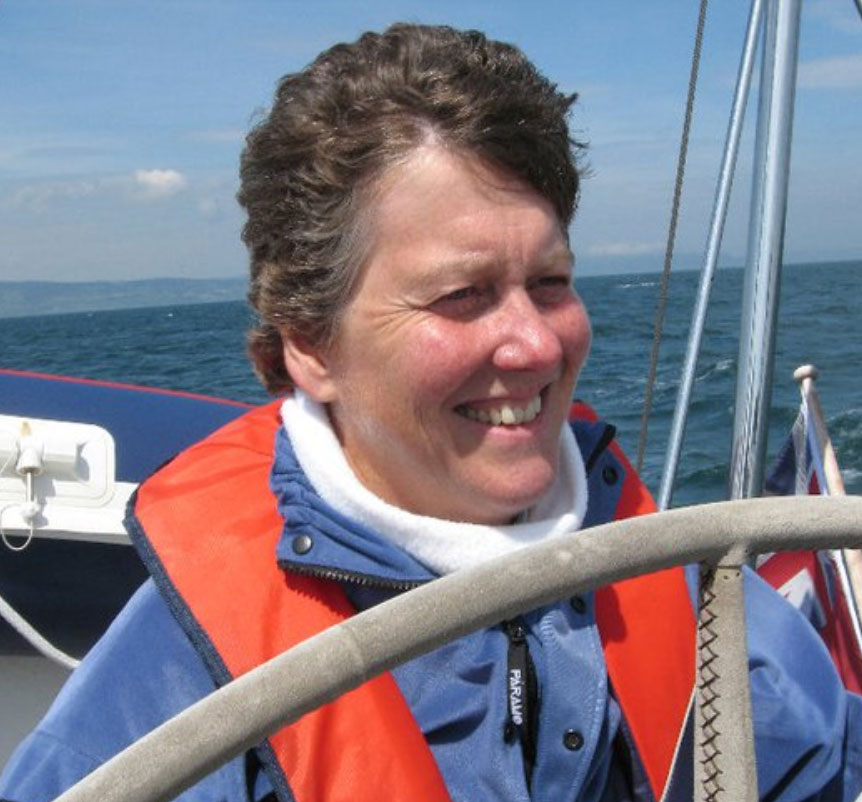
Mrs Betty Bott, the Procurator Fiscal, claimed my initial Plea, sent in August 2004,
had not been received; she suggested, through her boss (David Howdle), that it might have got lost during
an office refurbishment.
But this excuse did not match remarks Bott made about the upheaval to BBC Scotland on 3 March 2006:
"Dundee district procurator fiscal Betty Bott explained that the work took place
during the last six months of 2005".
So, not in 2004, then.
There was a proper upheaval in the procuratorate in 2006: just 18 months after
my prosecution, a Depute was suspended for
corruption and later resigned.
Through her Depute, Bott credulously accepted the testimonies of her fake witnesses and instigated the
gratuitous prosecution of a serious offence without looking for corroborating evidence.
She did not treat me, the Accused, fairly: the Duty of Care given to the 'victims' of the alleged
crime was not extended to me.
While the Code of Conduct for the English CPS states that,
"Prosecutors must be even-handed in their approach to every case, and have a duty to protect the rights of
suspects and defendants",
there appears to be no such requirement in the Scottish COPFS's Prosecution Code.
Instead, a Joint Protocol between Police Scotland and the COPFS contains the rather more woolly statement that,
"We will treat all suspects and accused persons fairly and ethically, and respect their rights under law."
Bott did not even manage to do this.
To complete her disdain for my human rights, she withheld the details of her case against me until just before the trial.
The Area Procurator Fiddler

David Howdle believes that conspiracies to pervert the course of justice can only be perpetrated
by people who live near one another:
a curious belief from an expert fiddler (musically speaking).
The Sheriff of Not Spotting Lies

"In this country we do not require documentary proof.
We rely heavily on
oral evidence, especially from those who were
present when the alleged events took place.
They [judges] are
guided by many things, including the inherent
probabilities, any
contemporaneous documentation or records, any circumstantial
evidence tending to support one account rather than the other,
and their overall impression of
the characters and motivations
of the witnesses."
Lady Hale, House of Lords, 2008
Sheriff Grant McCulloch is a man who spends his working life in summary courts where he is the sole decision maker.
He has seen it all, heard it all. He can distinguish truth from lies.
His court wasn't presented with any hard evidence but he didn't need it - his expertise, experience and intuition
were enough to help him to spot the truth.
But without corroborating evidence, this can be a risky basis for making judgements:
you end up assessing the probability / improbability of the events being examined - in effect making an informed guess.
McCulloch had to decide between two disparate stories, which are described in detail on another page
here and summarised below, in chronological order.
The Crown's story:
Event 1 - I cut in front of Roman's motorbike, so he braked.
Event 2 - I cut in front of Carnegie's Astra, so he hit the central reservation.
Event 3 - I overtook Carnegie (again).
Event 4 - Roman overtook both of us.
Event 5 - I undertook Roman (when he looked back at me).
Event 6 - Carnegie passed Roman (when they exchanged thumbs-up signs).
Event 7 - I undertook Roman (again) near a roundabout.
Event 8 - Roman overtook me (even though I was speeding and he wasn't).
My (true) story:
Event A - Carnegie tailgated me during a road rage incident, then slowed down once he'd got past.
Event B - A motorcyclist, Roman, passed me and pointed at Carnegie's car.
Event C - I overtook Carnegie as he slowed to leave the Kingsway.
In plumping for the Crown's story, McCulloch appears to have forgotten about lex parsimoniae, also known as Occam's Razor, the principle that the simplest explanation
for a phenomenon will usually be the correct one.
A scenario, the principle suggests, should not be padded out with irrelevant detail,
in the hope of making it more believable.
This is what the Crown’s witnesses did: they made stuff up. McCulloch, as an experienced judge, should have spotted it.
And, needless to say, a consistent explanation ought to trump one that is full of contradictions.
Mine should have been the more convincing, because it was succinct and contained no slip-ups.
But McCulloch was blind to all that.
Despite being occasionally on the ball (he spotted Carnegie's double overtaking error),
he failed to spot all the other improbabilities in the Crown's story.
Still, to be fair to the Sheriff, it was my solicitor's job to point out deficiencies in the Crown's case,
a task Crookswank utterly failed to accomplish.
Appeal Court 1

Lord William Nimmo Smith was, perhaps, too busy thinking about climbing his next Munro when he scribbled his hasty thoughts
on my Extension of Time application.
As a result, the paperwork wasn't completed correctly.
The Solicitor General herself misunderstood what he'd written and had to admonish him.
Appeal Court 2
Lady Ann Paton took the time and trouble to give my second Extension of Time application due consideration.
For that, I applaud her.
Ultimately, though, she was blind to the improbable nature of the Crown's case.
In truth, it would have taken a quite extraordinary individual to go against a work culture that is unable to accept
that it might be wrong.
|
|